
Pelvic health explained · English edition
Bladder pressure, urinary urgency, pelvic discomfort and pain with intimacy can be difficult to sort into separate boxes. A symptom that feels “like a bladder problem” may coexist with pelvic-floor tenderness or a gynecologic condition. That does not mean all of these conditions are the same.
A useful evaluation looks at how symptoms fit together while keeping different explanations open. The aim is a plan you can follow, with a clear reason for each examination, test or referral.
Begin with the pattern, not a label
Tell the clinician where the discomfort is, when it occurs and whether it changes with bladder filling, urination, periods, bowel movements or sexual activity. Mention vaginal or vulvar symptoms, unusual bleeding and any possibility of pregnancy.
An interstitial cystitis/bladder pain syndrome diagnosis is made through clinical assessment and evaluation for other possible causes. Urinary symptoms alone do not confirm it. Likewise, an earlier diagnosis of IC does not explain every new episode automatically.
A brief bladder or symptom diary can help if your clinician recommends one. It does not need to become a full-time project or a barrier to being seen.
A reassuring bladder test may leave other questions
Some tests help assess infection or examine urinary tract structures. They do not measure every aspect of muscle function or rule out every gynecologic source of pain.
A clinician may consider whether pelvic-floor assessment would add useful information. If the muscles are tender or difficult to relax, that can become part of the plan without assuming that the bladder, bowel or reproductive organs are irrelevant.
Pelvic-floor treatment is not automatically strengthening
A pelvic-health physical therapist can assess muscle function and select an appropriate approach. When the issue involves excessive tension, more squeezing may not be the right starting point. Exercises and other techniques should reflect the findings and your tolerance.
An internal examination or treatment requires informed consent. Ask what it could contribute, whether alternatives are available and how you can pause or stop. You do not need to accept a painful procedure simply to demonstrate that your symptoms are serious.
Make the referral question specific
Urology, gynecology and pelvic-floor therapy have different roles. A referral should identify what needs clarification—for example, whether emptying symptoms need urologic review, whether abnormal bleeding needs gynecologic assessment or whether muscle function is contributing to discomfort.
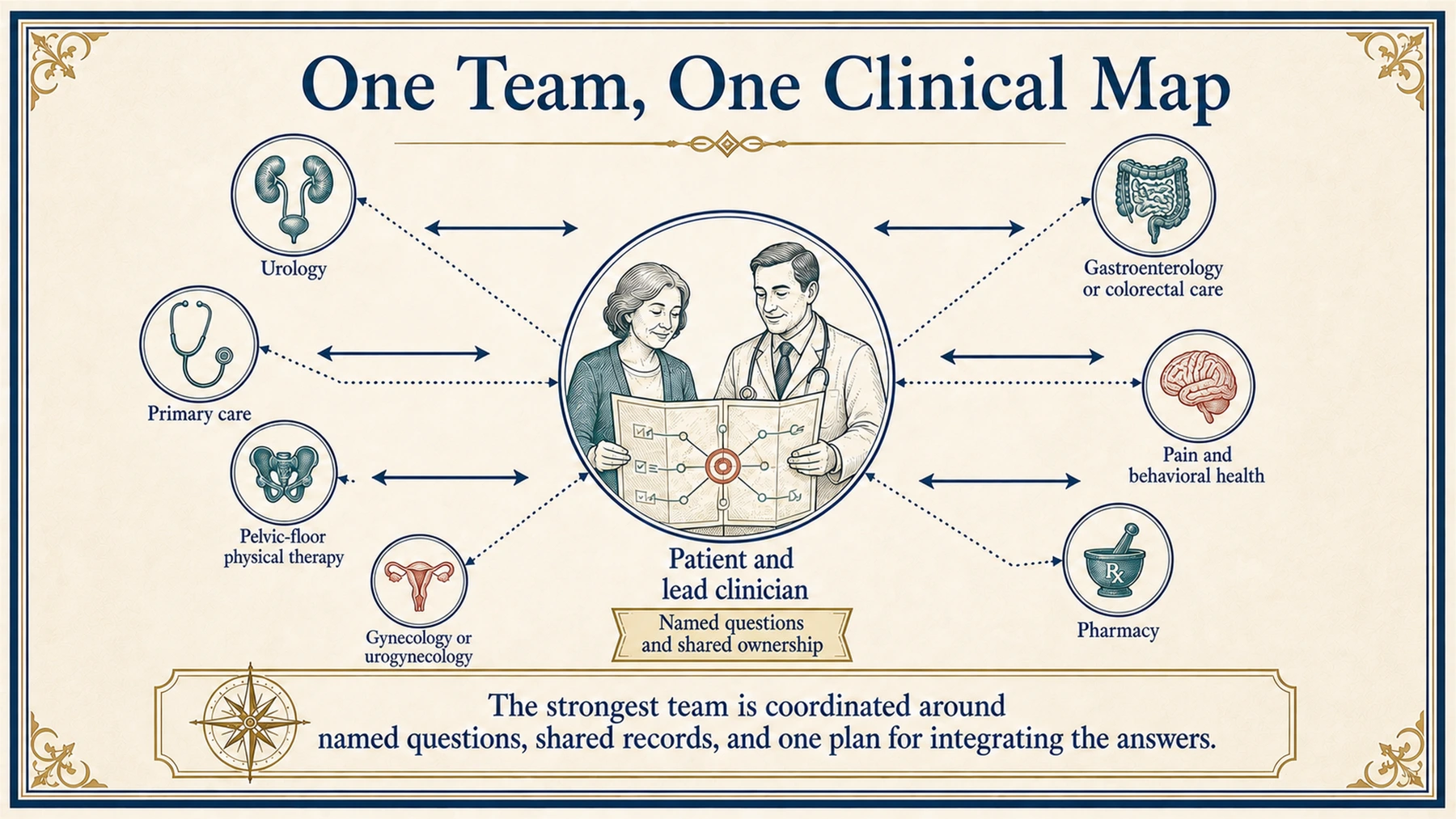
Ask which clinician will coordinate the results and update the plan. A shared summary is more useful than having to retell the entire story at every appointment. The summary can record the working diagnosis, relevant findings, next step and follow-up contact.
Coordinated care does not mean every person needs multiple specialists. It means the people involved know which question they are answering and how their findings will be used.
Agree on a practical goal
Choose an activity or symptom worth reviewing: sleeping more comfortably, using the bathroom with less distress or returning gradually to intimacy or movement. Treatment response should be discussed alongside side effects and the burden of the plan.
Know when to seek urgent help
New fever with urinary symptoms, inability to urinate, heavy bleeding or severe worsening pain needs urgent assessment. Sudden severe pelvic pain, especially with fainting or possible pregnancy, requires immediate medical evaluation. Do not assume these changes are an ordinary IC or pelvic-floor flare.
Discuss your symptoms with Elite GYN
Elite GYN has offices in Manhattan, Forest Hills and Rego Park. You can request a gynecology visit and describe your pelvic and urinary symptoms when booking. Your evaluation can help determine which questions belong in gynecology and whether another clinician or pelvic-health specialist should be involved.
Related reading and care
Sources and further reading
Adapted from Inside the Fire, by David Shusterman, MD. Practice editorial edition, October 29, 2026. These explanations support a conversation with your clinician; they do not diagnose your symptoms.